
Heparin sodium and heparinoids, do it as well in more than 50% of the patients. Most of the cases of telogen effluvium are subclinical; therefore, its true incidence is not clearly known [5]. No racial predilection of the disease has been recognized and it affects both males and females, with a higher incidence rate in females. However, it should be taken into account that women take hair shedding problem more seriously than men and are likely over-represented in seeking medical treatment [1]. The association of telogen effluvium with age is unclear; however, elderly women are known to be more susceptible to acute telogen effluvium following fever, trauma, hemorrhage, or psychological stress [1].
Conditions
Here it is proposed that immune-driven reactions are among the main etiological factors of COVID-19-related diffuse hair loss. There is direct histological evidence for the involvement of inflammation in PHL. Examination of biopsies from transitional scalp areas of patients uncovered extensive infiltration of mononuclear cells and actively degranulating mast cells within follicular sheaths. Fibroblastic activation in alopecic areas resulted in the deposition of collagen and the replacement of follicular technogenic elements by fibrotic sheath residua (fibrous tracts). In addition, soluble materials and cytokines secreted by infiltrating immune cells may also exert deleterious effects on the cyclic activation of papillary cells and stem cell populations [30].
Expert reveals how stress can cause hair loss - Yahoo News UK
Expert reveals how stress can cause hair loss.
Posted: Tue, 16 Apr 2024 11:42:57 GMT [source]
Other types of diffuse hair loss
New hair normally replaces the lost hair, but this doesn’t always happen. If there is ongoing stress, hair may take longer than six months to come back to normal. Like many COVID-19 survivors, Cabrera — who described herself as going “1,000 miles per hour” before the illness — continues to grapple with its aftermath. She still can’t walk 10 steps without being out of breath and hasn’t been able to return to work.
Geisinger College of Health Sciences
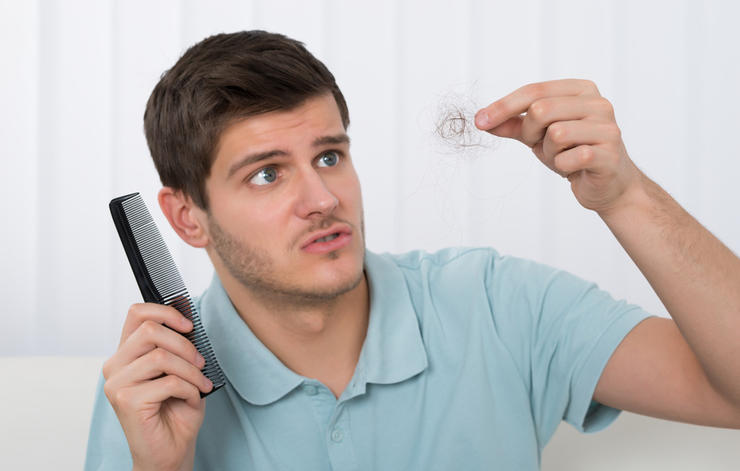
It's common for your hair to fall out over a period of days to weeks. You might also lose hair in other areas, such as your eyebrows, armpits, and pubic area. As with telogen effluvium, the loss is usually temporary, and your hair will grow back. It should be distinguished from anagen effluvium, in which the hair shedding is due to interruption of active or anagen hair growth by drugs, toxins or inflammation (eg, alopecia areata).
You can take a few steps to try to minimize the shedding or recover more quickly. Talk to your healthcare provider before making any significant changes to your routine or starting a home treatment. Trichodynia was observed by Sulzberger2 as a distinctive symptom of TE and later confirmed.3 Its presence in cases of AGA49,51 is probably due to the association of the two disorders.

Additional Common Questions
Telogen effluvium is the name for a common cause of temporary hair loss due to the excessive shedding of resting or telogen hair after some shock to the system. Telogen hair is also known as a club hair due to the shape of the root. In fact, it occurs only in about 20% of the women and not even in all pregnancies of the same woman, but almost always at the first delivery.
Alopecia Associated with CGRP Monoclonal Antibodies - The Dermatologist
Alopecia Associated with CGRP Monoclonal Antibodies.
Posted: Tue, 12 Sep 2023 07:00:00 GMT [source]
Also, frequently she complains about a “pain in the hair” (trichodynia),3,45,46 a symptom that should be asked for because the patients are shy to confess it spontaneously. Customarily, she is a well-being person without signs of anorexia or nutritional insufficiencies, and often, her TE is chronic/intermittent. However, it may be present in a discrete form in areas normally spared by AGA, especially the supra-auricular area (personal observation). If you have telogen effluvium (hair loss), a lot of hairs fall out from your scalp. This is more than normal and most noticeable when you wash your hair. You will not have patches of hair loss (bald patches) but rather a generalised thinning.
SARS-CoV-2 Related COVID-19, and Hair Loss
My own hair loss was categorized as a byproduct of stress and malnutrition, so I was advised to monitor my nutrition and look after my mental health. It felt comforting to have an answer and professional advice, and for a moment, I felt like I'd regained a sense of control. But with no real cure to curb the hair loss and realizing it could take years for my hair to return to its normal state, I knew the real fix needed to happen inside my head, not on it.
What’s the difference between acute telogen effluvium and chronic telogen effluvium?
While we know that stress is an undeniable factor in most people’s lives, its impact on so many aspects of our physical and mental health is perhaps more far reaching than we might imagine. When it comes to our hair, stress is the second biggest cause of hair loss after genetics, but because the process usually takes anywhere between three and six months to happen, many people don’t make the connection. Typically, the most common types of hair loss are treated with topical or oral medications, which will likely be the first course of treatment.
While some people might experience hair loss as early as puberty, others might not notice symptoms until their middle ages. Trying to tell if you’re actually losing hair or just experiencing some normal shedding? Read on for more information about hair loss and how to manage it. Over the following months, as I formed healthier routines, I tried and struggled to mentally adapt.
A collective teloptosis may in fact coexist with an autoimmune form. From this point of view, the possible coexistence of TE with postpartum thyroiditis, which develops occurs in about 5% of the new mothers,48 has never been investigated. Cycle synchronization may occur also in the course of long-lasting medications with estrogens. Minoxidil and finasteride do the same and may induce collective teloptosis 3–4 months after the medication is stopped.
Thus, it is normal to lose up to about 100 hairs a day on one's comb, brush, in the basin or on the pillow, as a result of the normal scalp hair cycle. Acute telogen effluvium can affect people of all age groups and both sexes. Chronic telogen effluvium with no clear precipitating cause tends to present in otherwise healthy women 30–60 years of age. When diagnosing telogen effluvium, a doctor will examine the hairs that have fallen out. The diameter and length of the lost hairs can signal this condition and may help a doctor differentiate between telogen effluvium and alopecia. Treatment for telogen effluvium depends on what is triggering the hair loss.
At any given time, you have a small amount of hair in the telogen phase. The diagnostic process entails a careful and comprehensive history-taking, particularly focusing on the period 6–12 months prior to the onset of shedding, by which one will often identify the causative stressor. Some surgeries or vaccinations can cause a shock to your system and put the hair follicles into a resting state. Physical trauma, like being in a car crash, having blood loss, or having surgery, might trigger TE. Exposure to toxins like heavy metals may also cause this condition. This is because the “shock” of the environmental change causes your hair follicles to go into a resting state.


No comments:
Post a Comment